Beauty Waste, Reimagined: Inside ReFactory’s British Beauty Week 2026 Installation
Turn waste into worth
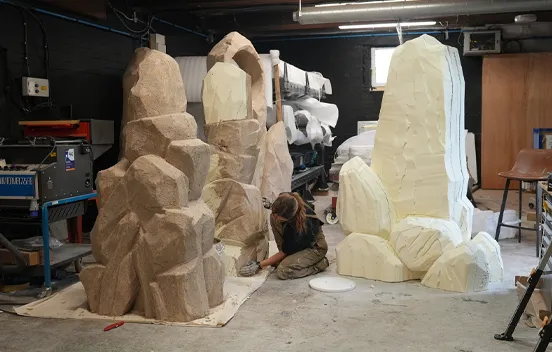
Through skilled craft from joinery to stitching, materials are transformed into enduring, functional creations.
What happens when beauty waste becomes the centrepiece rather than something hidden from view?
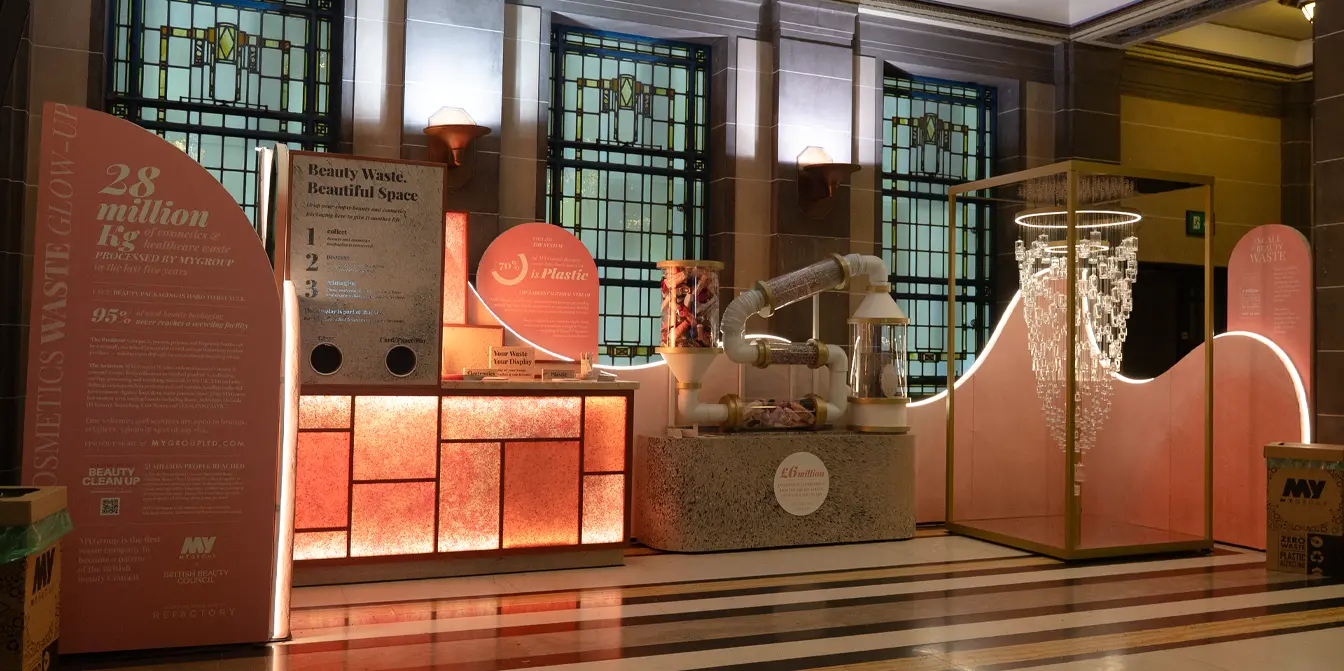
For British Beauty Week 2026, ReFactory partnered with MYGroup and the British Beauty Council to create an exhibition activation that brought the scale, complexity and potential of beauty waste into focus.
Installed at the entrance to the Council’s Industry Day at Freemasons’ Hall, London, the stand explored what happens to difficult-to-recycle cosmetics and healthcare packaging, from collection and material separation through to processing, recovery and new applications.
But rather than looking like a conventional recycling exhibition, it took its cues from the beauty industry itself: considered finishes, sculptural forms and materials designed to be seen and touched.
The result was a physical demonstration of how recovered materials can move beyond waste management and into design, manufacturing and retail.
The scale of beauty waste
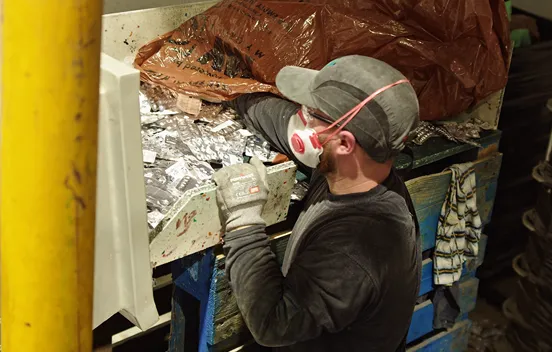
Beauty packaging presents a particular challenge for recycling. Products often combine glass, plastic and metal, alongside pumps, caps and other components. Small formats and residual product can make these items difficult to process through conventional recycling routes.
The scale of the challenge is reflected in MYGroup’s work across cosmetics and healthcare.
Over the last five years, MYGroup has processed:
- 28 million+ kg of cosmetics and healthcare waste.
- 1 billion+ individual items of healthcare and cosmetics waste.
- 3.5 million+ kg of difficult-to-recycle Health, Beauty & Wellness packaging collected and recycled through its take-back schemes.
These figures represent different aspects of MYGroup’s operations, from wider material processing to dedicated take-back schemes. Together, they demonstrate the scale of the work involved in recovering materials that might otherwise be difficult to recycle.
The stand brought this data to life through three installations, each exploring a different part of the recovery process.
Making take-back part of the beauty experience
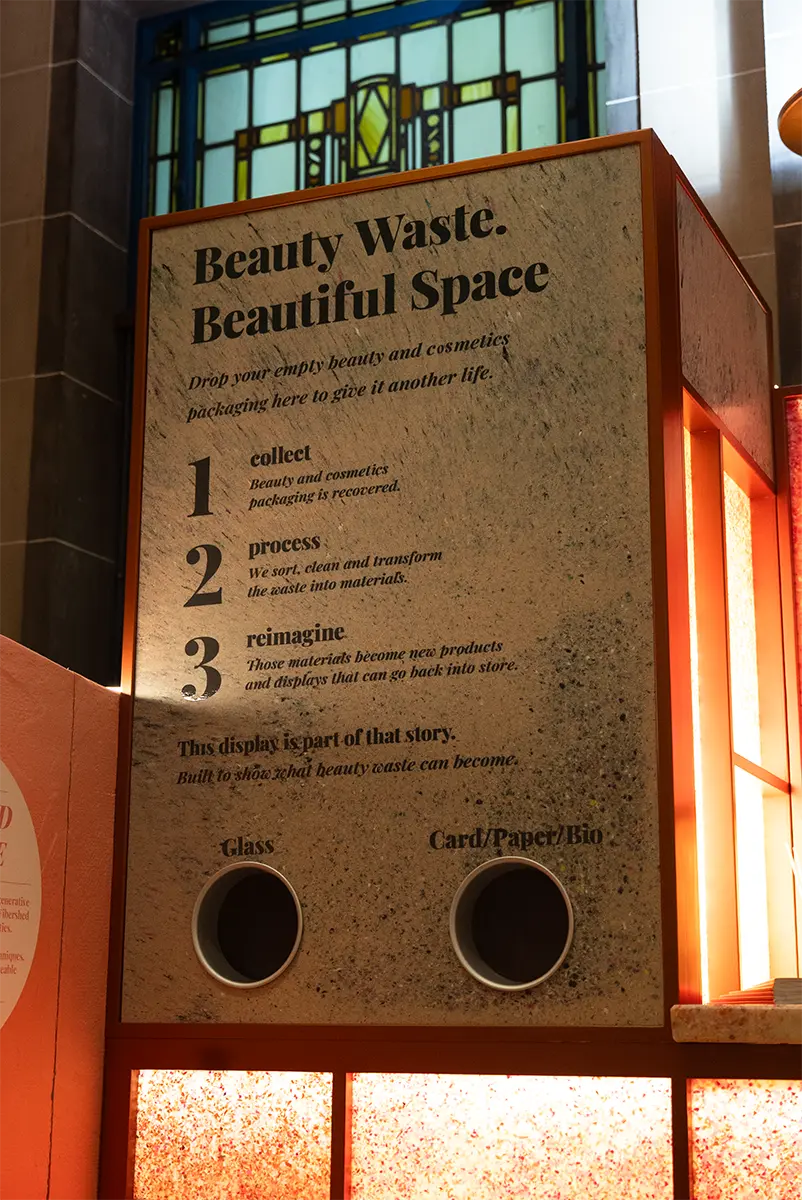
The first installation, Beauty Waste. Beautiful Space., explored how recycling could become a more considered part of the in-store experience.
Take-back points are often treated as a practical necessity. ReFactory approached the concept differently, developing a retail-inspired station that combined functionality with material innovation.
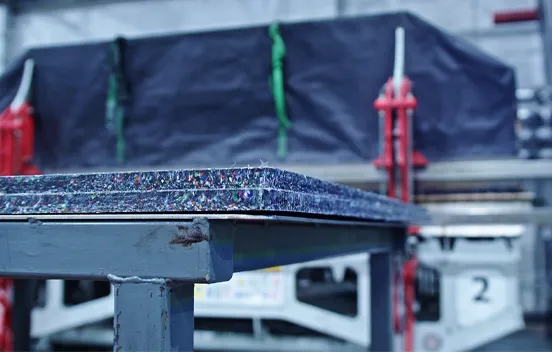
The countertop featured shredded beauty packaging encapsulated in recovered eco-resin, while custom pink MYBoard, manufactured from recovered beauty packaging, introduced further colour and texture. Partially transparent panels and integrated lighting revealed the recycled material within.
The installation demonstrated how a take-back point could feel at home in a premium retail environment, while giving customers a tangible connection to what happens to returned products.
Fragrance packaging offered a particularly useful example. A single bottle might contain glass, plastic, metal and residual fragrance, with each component requiring appropriate handling and separation before recovery.
The design made those materials part of the experience rather than something hidden behind the process.
From collected waste to new products
The second installation, Follow the System, focused on plastic recovery.
A pipe-based display translated the process into five stages:
Collect → Sort → Shred → Process → Remake
Inspired by the machinery operating at MYGroup’s Hull treatment plant, the installation used physical material samples to show how plastics change throughout the process.
The final stage was central to the story. Recovering a material is only part of the opportunity; suitable recovered plastics can also become feedstock for new products and applications.
Custom pink MYBoard, developed specifically for the event, featured in the display. The counter supporting it was made from the same material, demonstrating how recovered beauty packaging could be used in furniture and retail fixtures.
This is where MYGroup’s processing capabilities and ReFactory’s design-led approach connect. Materials recovered through industrial processes can become the starting point for new products, installations and interior applications.
The objective isn’t simply to show that waste can be recycled. It’s to explore what that recovered material can do next.
Turning returned fragrance bottles into a centrepiece
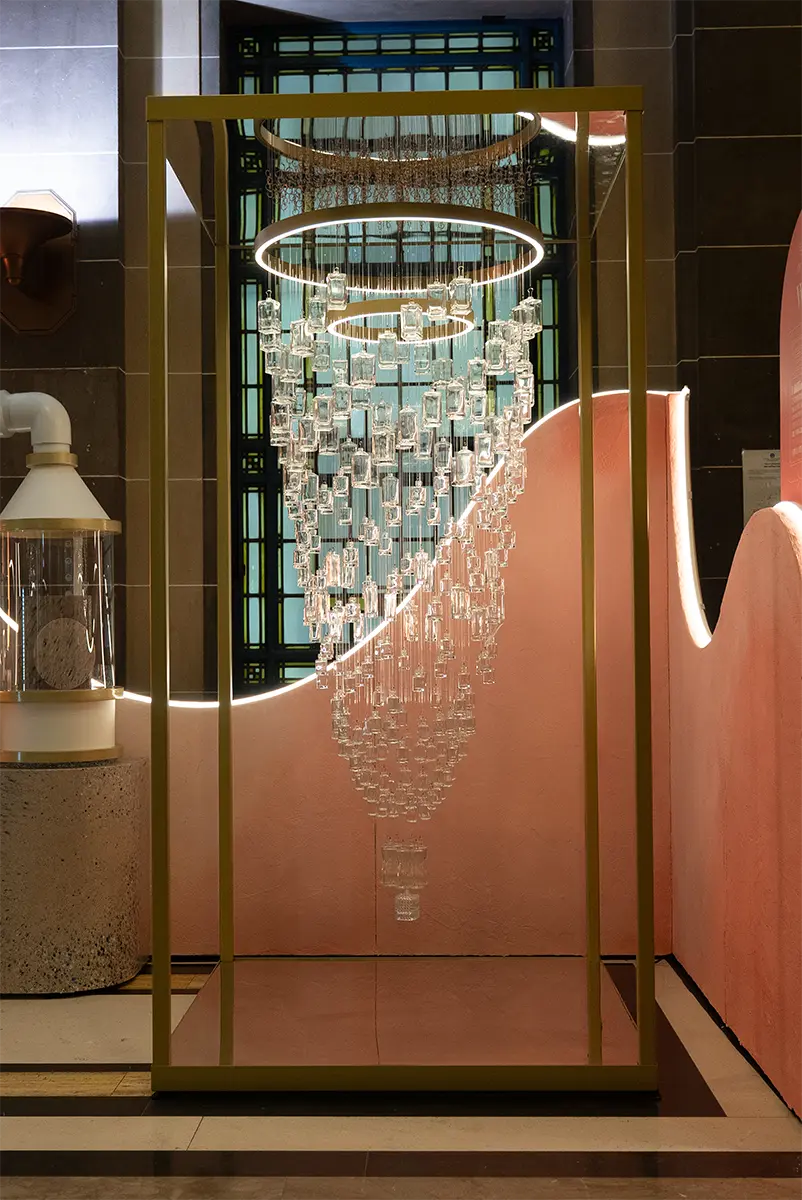
The largest sculptural element of the stand used hundreds of genuine returned fragrance bottles from MYGroup’s waste streams.
Arranged around a seven-arm spiral, the bottles formed a suspended installation incorporating illuminated circular elements. Changing heights, densities and reflections created a sculptural feature that appeared decorative from a distance but revealed its origins as recovered packaging up close.
The design deliberately left the bottles recognisable. Their different shapes, colours and finishes became part of the visual language, making the variety within the waste stream impossible to overlook.
Behind the finished installation was a detailed process of CAD development, layout studies and physical prototyping. Each bottle had to be sorted, emptied, cleaned, inspected and prepared before being individually suspended from a CNC-drilled mirrored plate.
The result turned an everyday waste item into an architectural feature, showing how design can change our perception of materials that are usually discarded without a second thought.
Recycled materials, without the expected aesthetic
Across the wider stand, ReFactory challenged the idea that recycled materials need to look overtly industrial or conventionally ‘eco’.
The palette of blush pink, cream and mineral tones drew inspiration from premium beauty retail. Clean forms, concise graphics and tactile finishes allowed the recovered materials to sit naturally within that environment.
Even the exhibition walling was made entirely from recycled waste, combining a MYBoard structural core with a distinctive render-effect finish created from shredded cardboard beauty packaging.
Alongside the eco-resin countertop and custom MYBoard, these elements demonstrated the potential for recovered materials to deliver both function and finish.
The approach was intentional. For circular materials to find wider applications, they need to work in the contexts where products are designed, sold and experienced. Performance and provenance matter, but so does how a material looks, feels and functions.
Design can help bridge that gap.
Connecting material recovery with wider industry change
The activation also highlighted the wider work taking place across the beauty industry.
MYGroup is the first waste management and recycling company to become a patron of the British Beauty Council. Its take-back programmes provide routes for difficult-to-recycle beauty and healthcare packaging, while its processing infrastructure supports the recovery of materials from these schemes.
The stand featured the Council’s Beauty Clean Up activity and recycling-map call to action, connecting the physical installation to the wider conversation around take-back, reuse, refill and responsible packaging.
The Great British Beauty Clean Up reached more than 21 million people in 2026, helping bring the issue of beauty waste to a much wider audience.
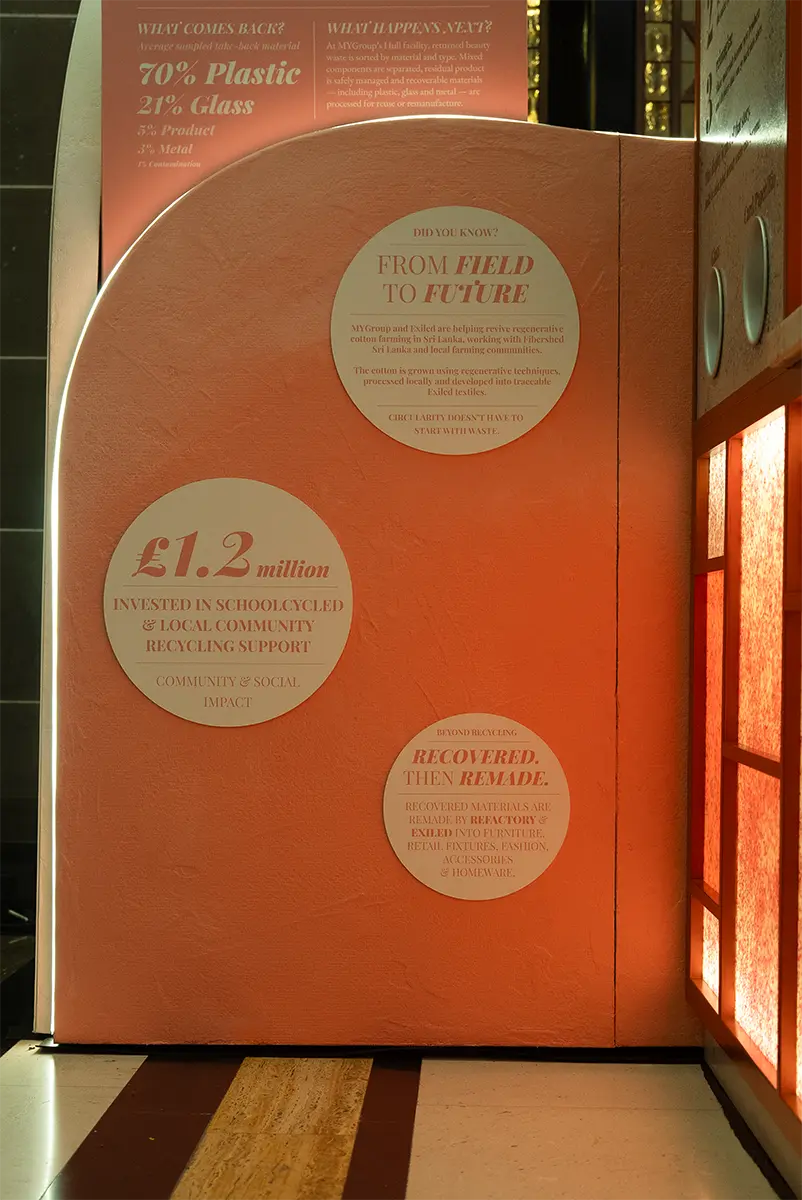
Alongside this work, MYGroup has invested more than £6 million in cosmetics and healthcare recycling over the last five years, creating 80 additional jobs. Its wider commitment to community recycling also includes more than £1.2 million invested in SchoolCycled and local community recycling support.
These figures demonstrate that material recovery involves more than the recycling process itself. It requires infrastructure, investment, collaboration and practical ways for businesses and consumers to participate.
From waste stream to design opportunity
The British Beauty Week activation brought together two complementary capabilities.
MYGroup provides the infrastructure to collect, separate and process difficult material streams at scale. ReFactory explores how recovered materials can be transformed into products, furniture, retail fixtures, installations and experiences.
By making those materials visible throughout the stand, the project connected the industrial reality of recycling with the creative possibilities of remanufacture.
It also showed that circular design doesn’t have to compromise on aesthetics. With the right combination of material development, fabrication and creative thinking, recovered waste can become an integral part of a premium environment.
For the beauty industry, that creates an opportunity to rethink not only what happens to packaging at the end of its life, but also how recovered materials might influence the products and spaces that come next.
Explore the project: Discover how ReFactory developed the three installations, engineered the suspended fragrance bottle sculpture and incorporated recovered beauty packaging throughout the stand. Click here to read more.
Turn waste into worth
Through skilled craft from joinery to stitching, materials are transformed into enduring, functional creations.